
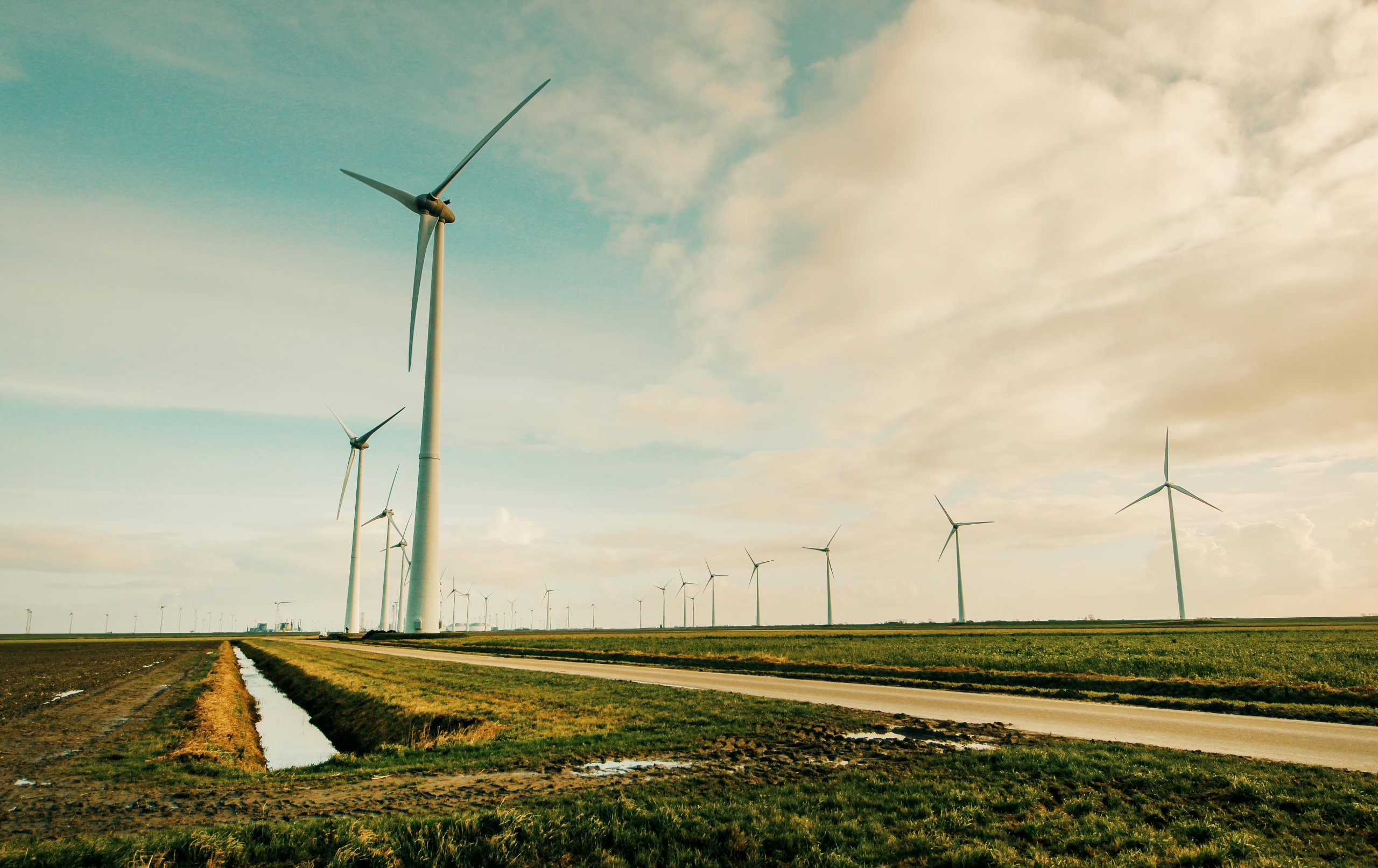
Investing in locally generated clean energy
The money we raise from investors and fundraising is used to build renewable energy facilities that benefit our community across the Bedfordshire region. Our volunteers work to raise capital through grant funding and share schemes and invest it in modernising our local energy facilities so that we can reduce our area’s reliance on fossil fuels and improve our carbon footprint. Any surplus we generate is used to benefit people living in fuel poverty in our county.
The installations we invest in can vary in size, from rooftop solar panels on community buildings like schools, to enabling communities to buy their own wind turbines, heat pumps, or even local hydro-power projects. These projects can provide energy for homes and businesses, reduce energy costs, and bring in money for the community. Buildings like community centres, churches, agricultural buildings and warehouses often have ideal rooftops for solar panels, and don’t always need all the energy they generate.
We will take ownership of planning and managing the installation. Under a long term contract we will then sell the energy back to the organisation at a discount to the market price and any surplus energy will be sold to the grid. Investors receive a target return, set each year, with any remaining surplus reinvested into further community projects.
Our current projects
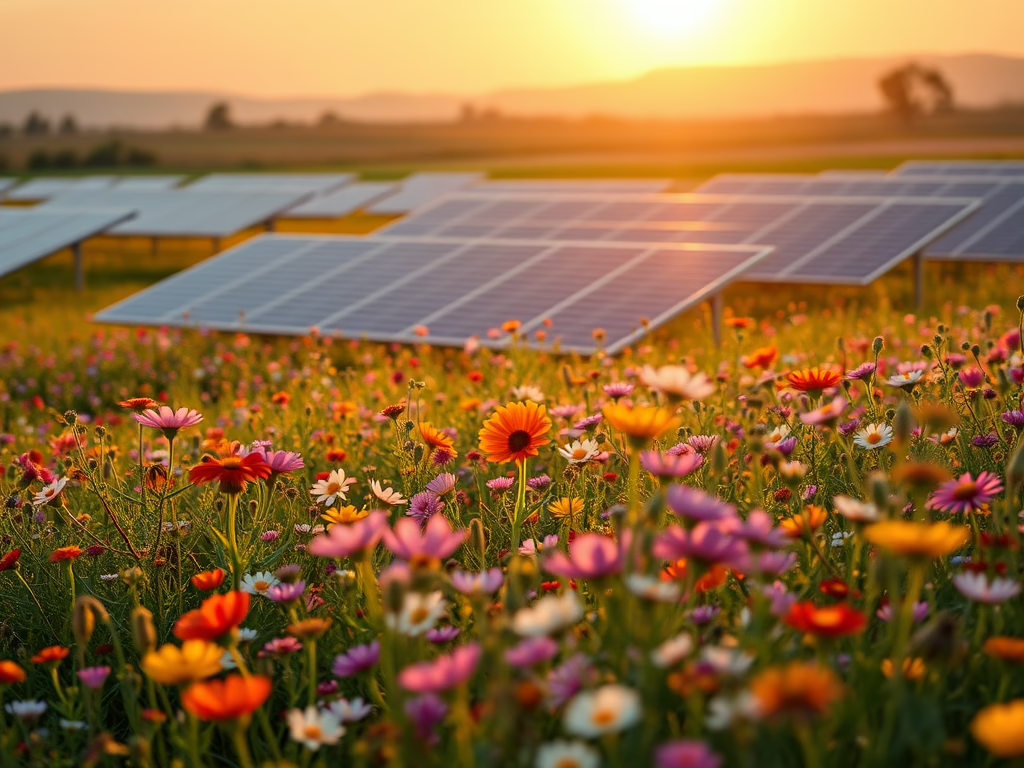
Sheerhatch Solar
Currently in planning stage. A solar farm on farmland between Cople and Northill with capacity to provide power to over 15,000 homes.
A minimum 10% biodiversity net gain will be delivered across the site which may involve the planting of trees, hedgerows and the installation of bird boxes. Subject to planning consent.
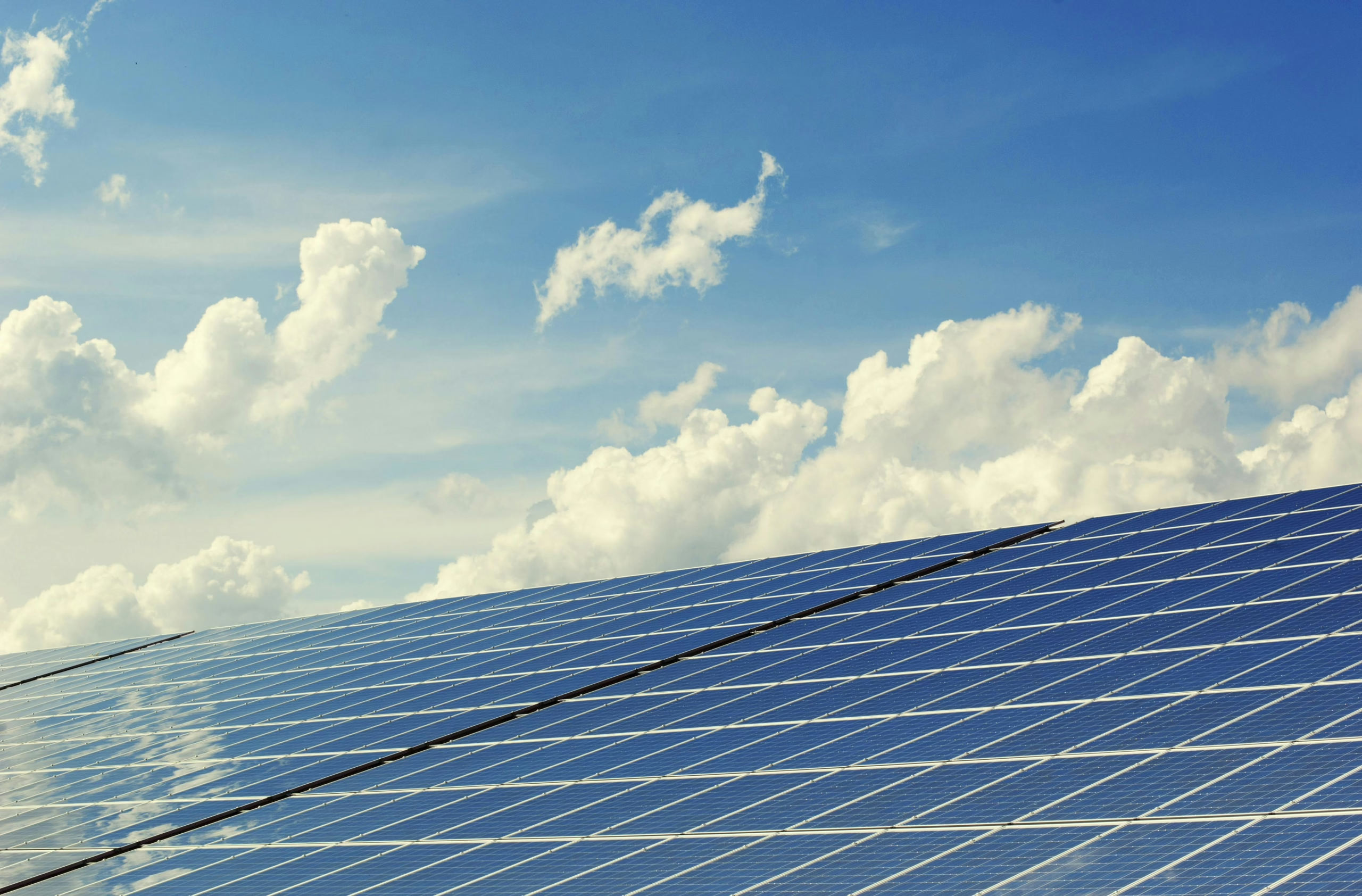
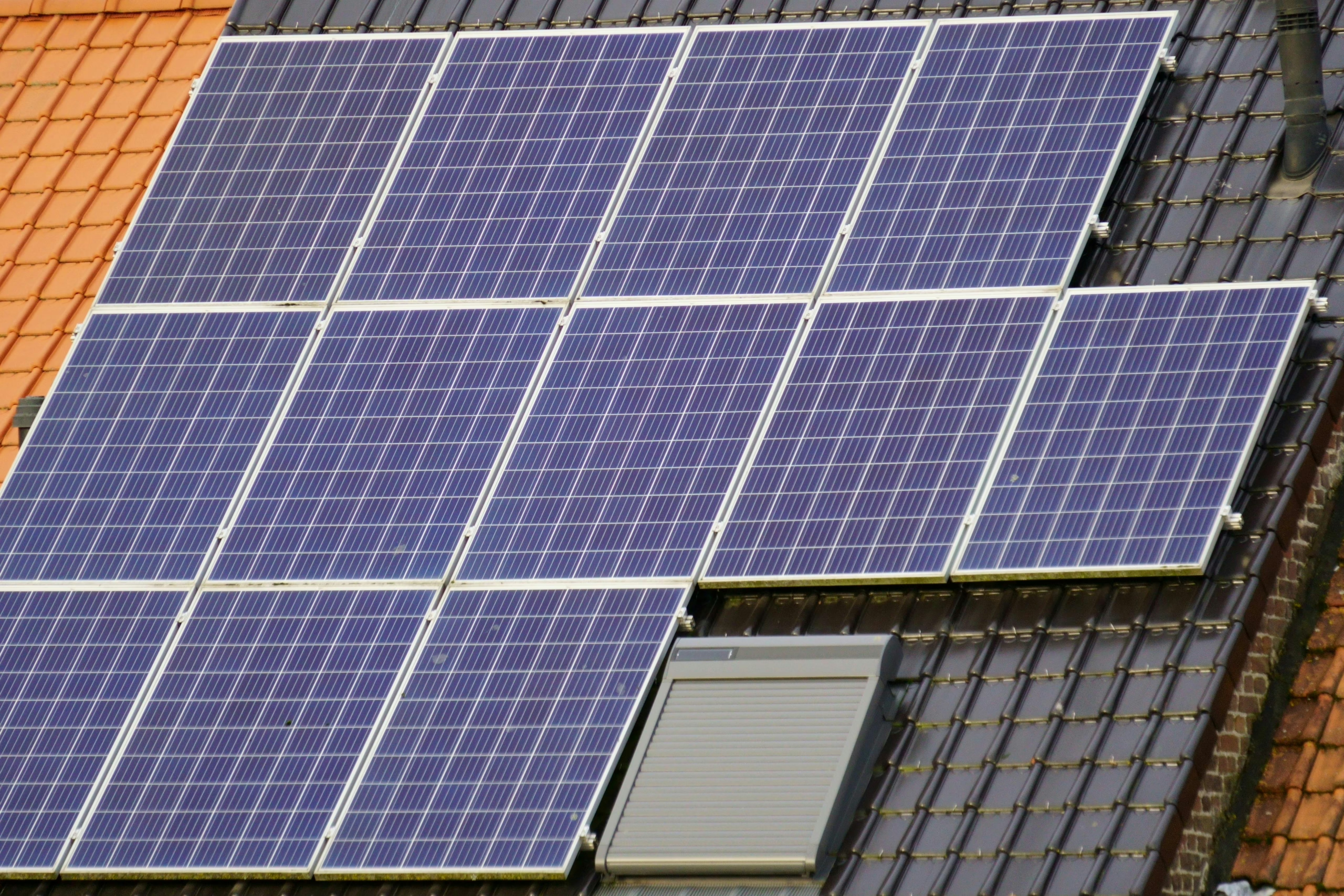
Kempston Police Station
Currently in feasibility stage. Potential to create a roof mounted solar array on the Police Headquarters in Kempston. Subject to planning consent.
Renewable Energy
Roof Top Solar
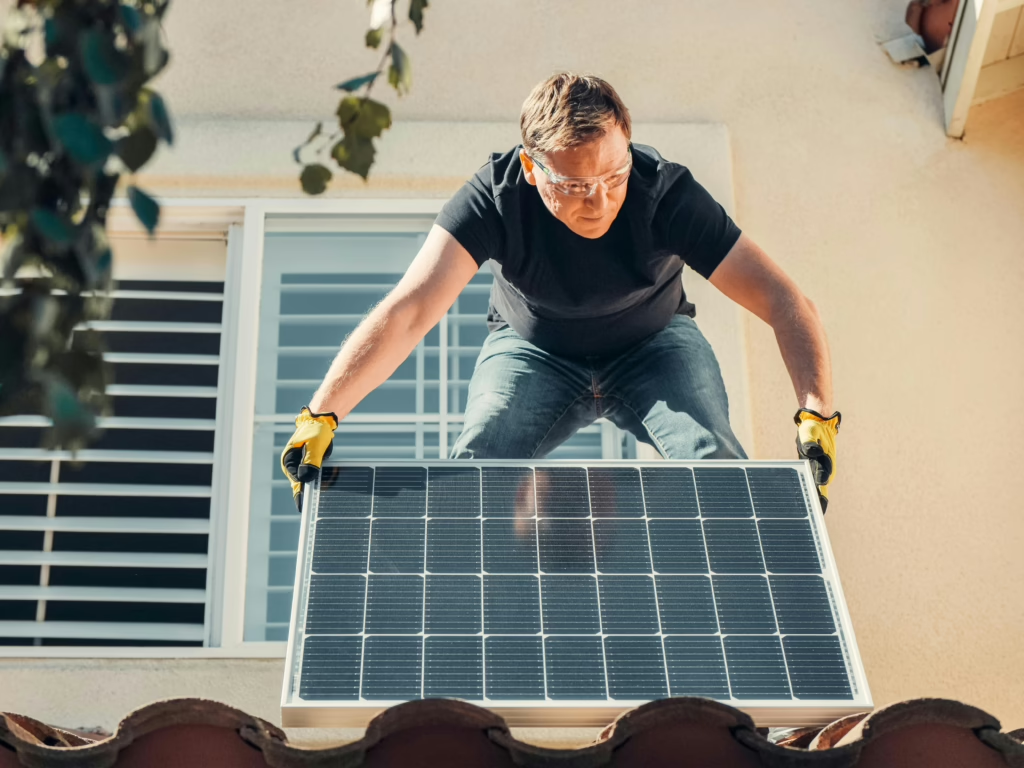
From factories to schools, leisure centres, golf clubs or community centres. Anywhere there is a roof suitable for an installation could house a solar array, which could be generating cheaper, greener energy for use by the organisation and the community. As the panels are often not visible from the ground, this can be a popular solution.
We need your support to make this happen. If you know of any suitable roofs, let us know and we will look at the feasibility.
Wind Power
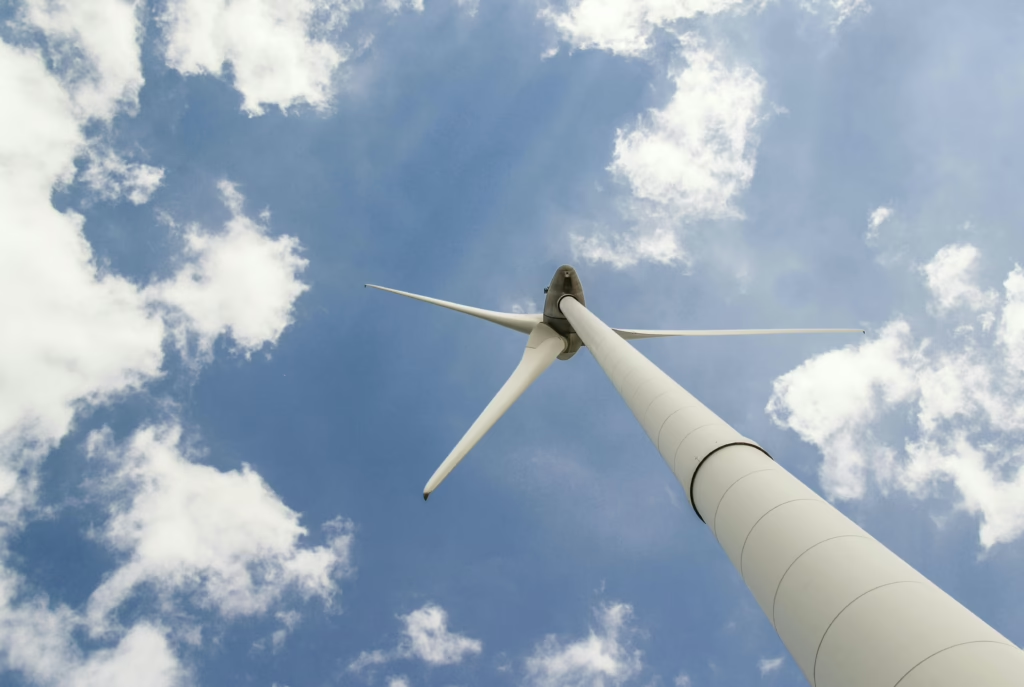
The amount of energy generated by a wind turbine depends on the height and size of the hub, but typically they have a capacity of between 2-3MW, which is roughly enough to power 1500 to 2000 homes.
People can invest in one or more turbines of their own, either as individuals or as a community group acting together. Sometimes it is possible to pay for a turbine as part of a bigger commercial wind farm development, which reduces the relative burden of planning and construction costs. The community benefits from the income that their project generates, either through the power generated or the surplus from selling energy back to the grid.
Hydro Power
Water has been used to generate power for generations. We are fortunate to live in a county rich in rivers, with the River Ivel, The Great Ouse and the River Lea.
One example of a community hydro scheme is Congleton Hydro where an Archimedes Screw was installed on a river to convert river flow to electricity. The project generated energy equivalent to 60 homes as well as a surplus of £5,000 per year which was used to fund community projects.

Heat Pumps
Heat pumps are commonly available in three forms – Ground Source, Air Source or Water Source. We can provide advice on replacing your current oil, gas or electricity supply with a more cost-effective and lower carbon heat pump, or installing a new system.
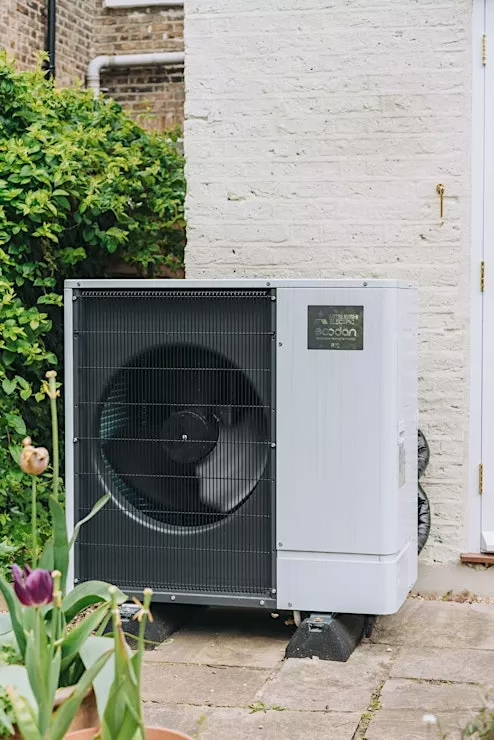
ASHPs can have efficiencies of between 2-4 times that of a conventional gas or oil boiler and can provide cooling as well as heating. This may also be a good option for community buildings such as a village hall, and additional grant funding may be available. Let us know if your village has plans to modernise a community building.
Ground Mounted Solar
Ground mounted solar arrays on brownfield sites offer a superior energy production through optimal unshaded south facing positions with easier maintenance compared to roof systems. Panels can be positioned at the perfect angle and orientation for maximum sunlight exposure, enabling panels to track the sun’s path to maximise energy production by up to 25-45% compared to fixed-tilt systems.
The panels can also be moved over time allowing for a less permanent solution. The land can still be used for grazing animals and there is evidence that bio-diversity and local ecology can be enhanced through correct management. Read more here.
Case Study: Enhancing Energy Efficiency in a Victorian Flat
In late October, a housing advisor and a colleague visited a first-floor converted Victorian flat in a quiet area of town. The owner, a single occupant who had recently renovated the property, wanted advice on improving the energy efficiency and general management of her home. She mentioned that her heating bills had been quite high during her first winter there, and she was eager to find ways to reduce costs.
Become an Investor
Members can help to finance the construction of renewable energy production facilities, such as solar, wind, hydro and ground source which will help to provide cheaper energy for our communities and reduce carbon emissions.